

Making Waves on the International Stage
From a bold classroom challenge to international success, Team MAKO’s journey has been shaped by the support of a community that believed in its vision.
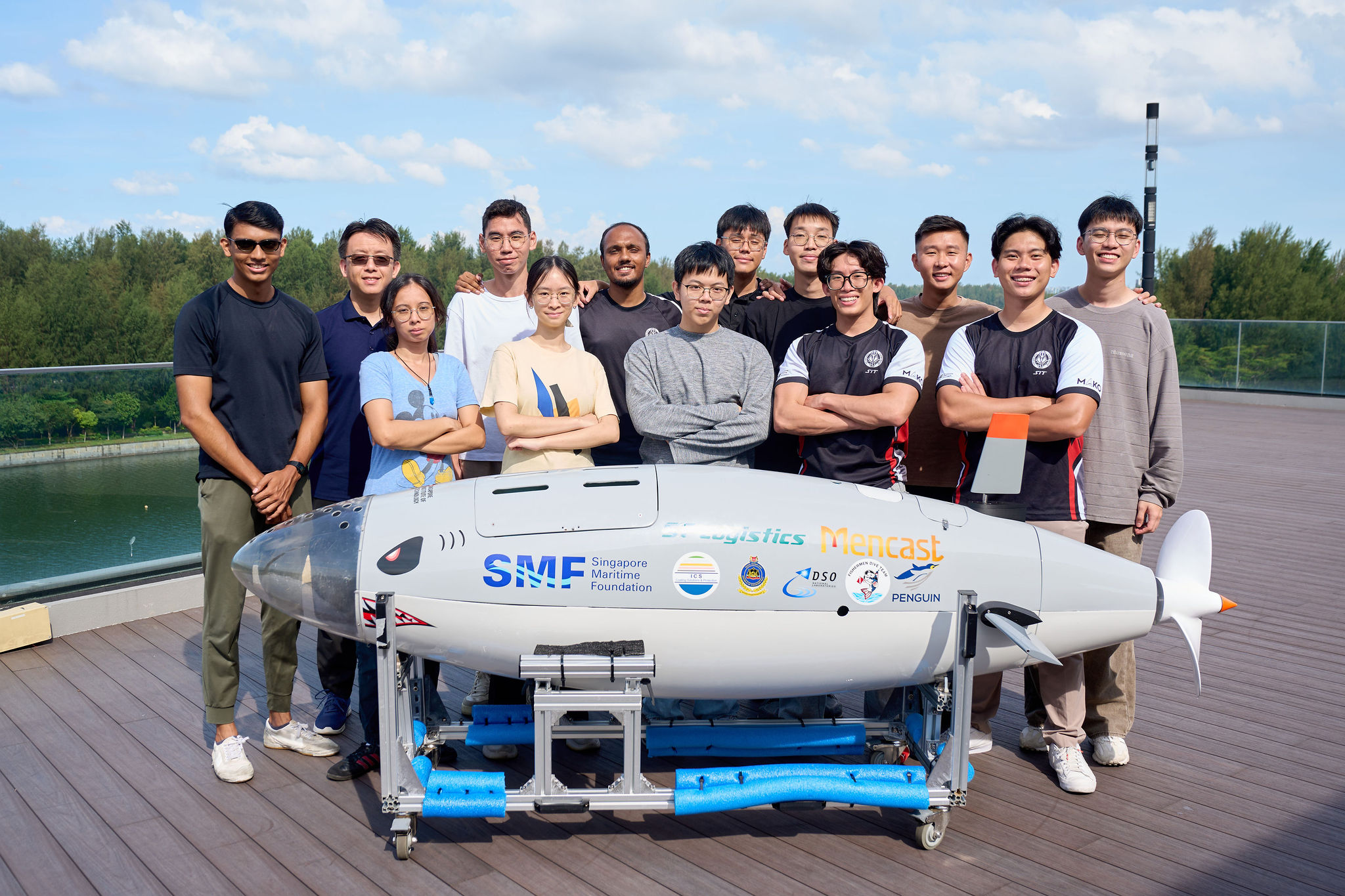
Few would expect a newly formed student team to make waves on the international stage. Yet Team MAKO has done just that.
At the 2026 European International Submarine Races (eISR) in Gosport, United Kingdom, the team achieved 4th overall out of 12 international teams, while also securing 3rd place for Best Run, Best Speed and Best Time — a strong result that reflects the students’ perseverance and collective effort.
This achievement builds on the team’s pioneering debut in 2024, when Team MAKO – then known as SIT Nautical Knights — became the first and only Singaporean and Southeast Asian team to compete internationally in a human-powered submarine race, clinching the Best Newcomer Award and placing 4th overall against far more established global teams.
“We want to be the best in Asia,” says Team MAKO Captain Madhan Mathivanan.
That ambition reflects how far the team has come in just a few years — from a classroom challenge conceived at SIT to an internationally competitive student-led engineering project.
Propelled by a Bold Idea
Named after the fastest shark in the ocean, Team MAKO began with a bold idea from Associate Professor Wang Xin, Programme Leader of the Bachelor of Engineering with Honours in Naval Architecture and Marine Engineering (NAME). He challenged his students to build a submarine from scratch and compete internationally at the eISR.
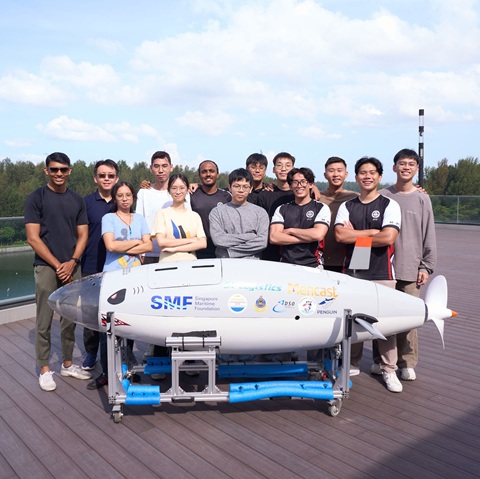
What began as a group of 10 NAME students has since grown into a multidisciplinary team of about 30 members from 9 disciplines, united by a shared goal: building and racing a human-powered submarine — something few would ever get to experience.
Team MAKO’s journey has been defined by a series of milestones, each building on the last and reinforcing the team’s belief in what was possible:
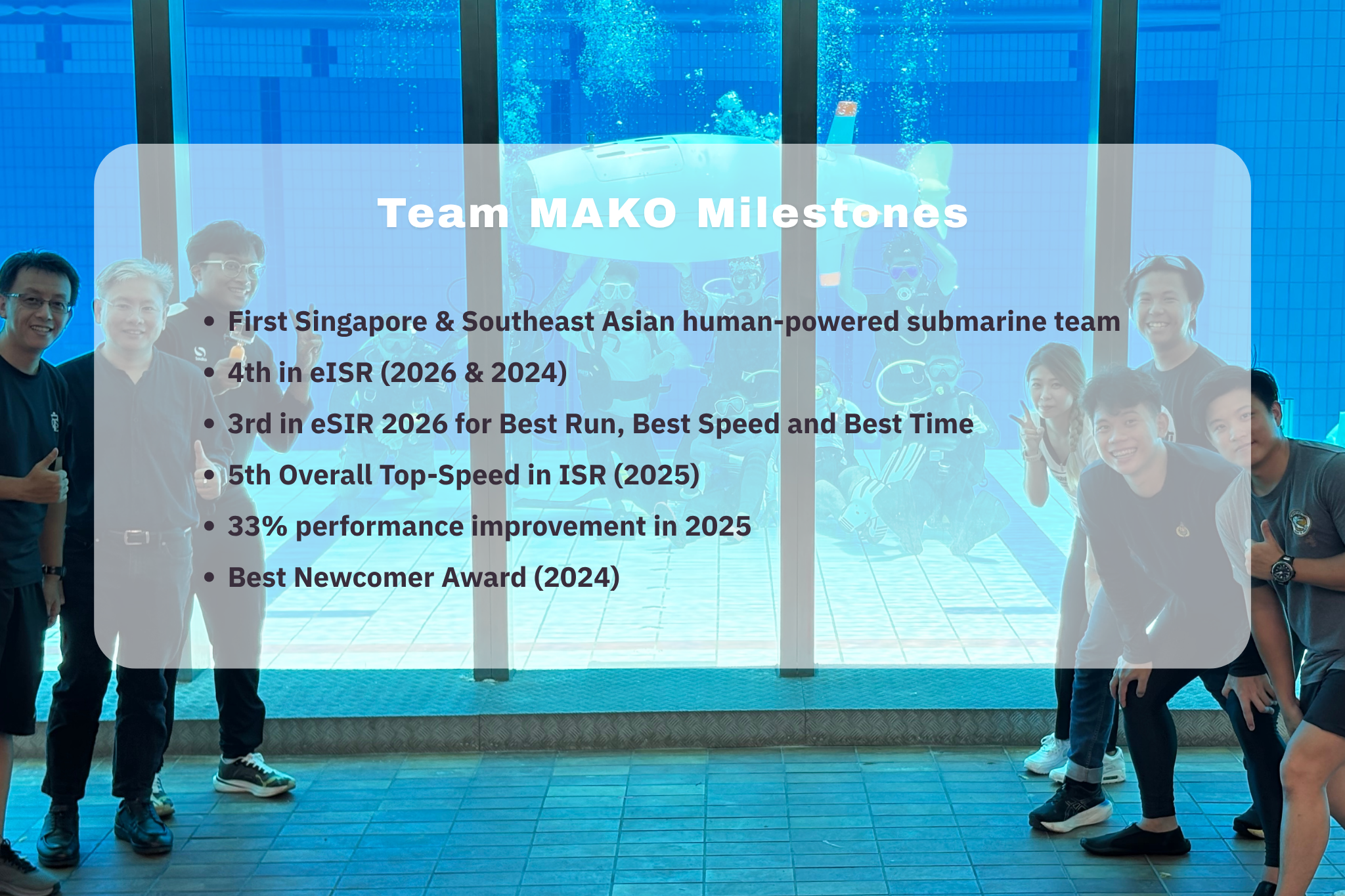
These milestones are a testament to the determination, ingenuity and collaborative spirit that have propelled the team forward.
An Out-of-Classroom Journey
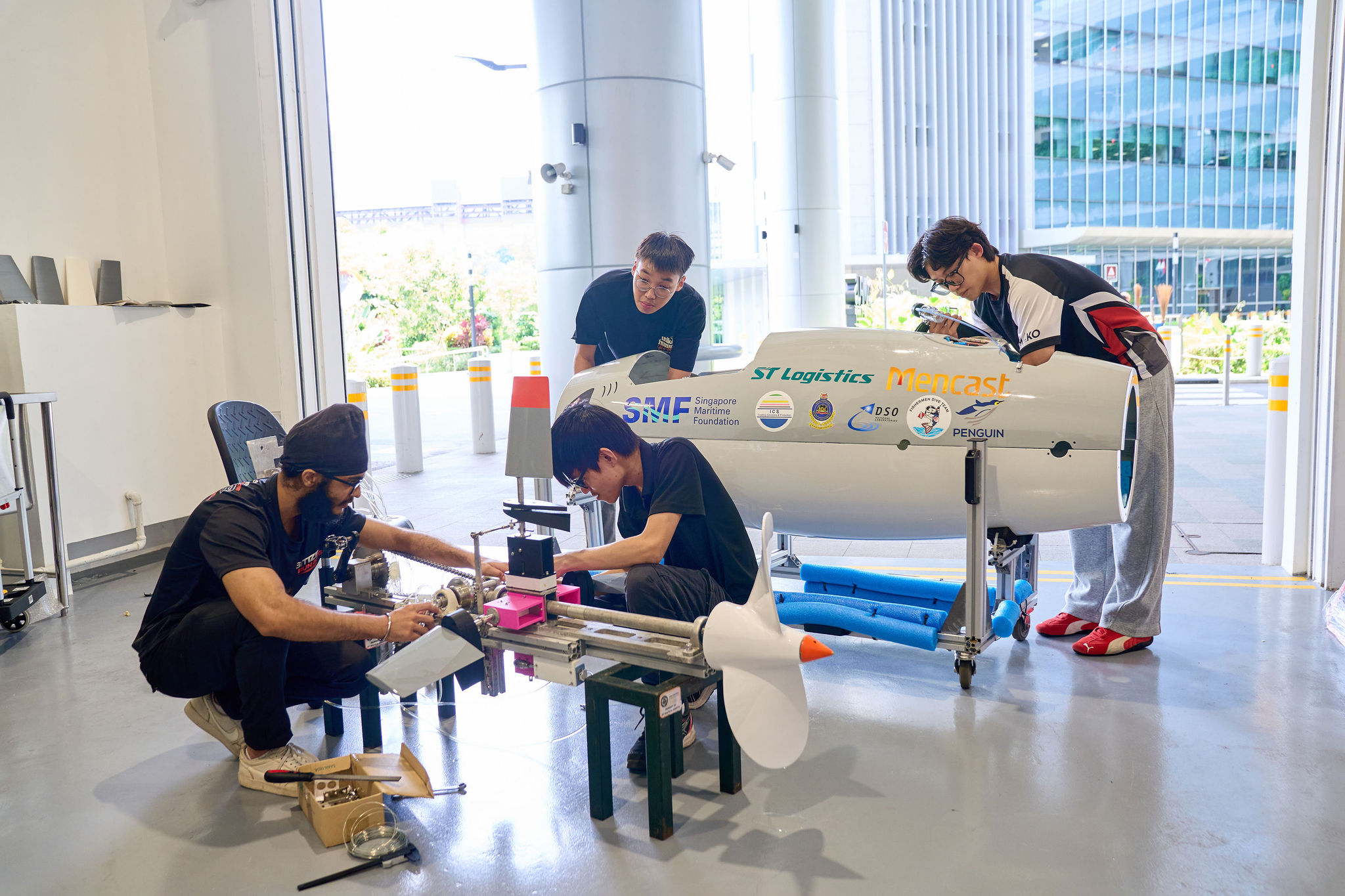
Building and racing a submarine demand far more than classroom knowledge. It requires specialised materials, fabrication processes, testing facilities, logistics coordination and technical expertise.
Over 9 months, under the guidance of Associate Professor Wang, whose expertise lies in marine hydrodynamics, the team translated classroom concepts and independent research into a functioning submarine. Drawing lessons from earlier iterations, they learnt advanced modelling and simulation techniques while working closely with industry partners, Integrated Coating Solutions and Mencast, gaining invaluable exposure to professional hull construction and propeller fabrication processes.
From propulsion systems and electronics to sensors, drivetrain systems and manoeuvring controls, every component underwent repeated rounds of experimentation, redesign and troubleshooting.
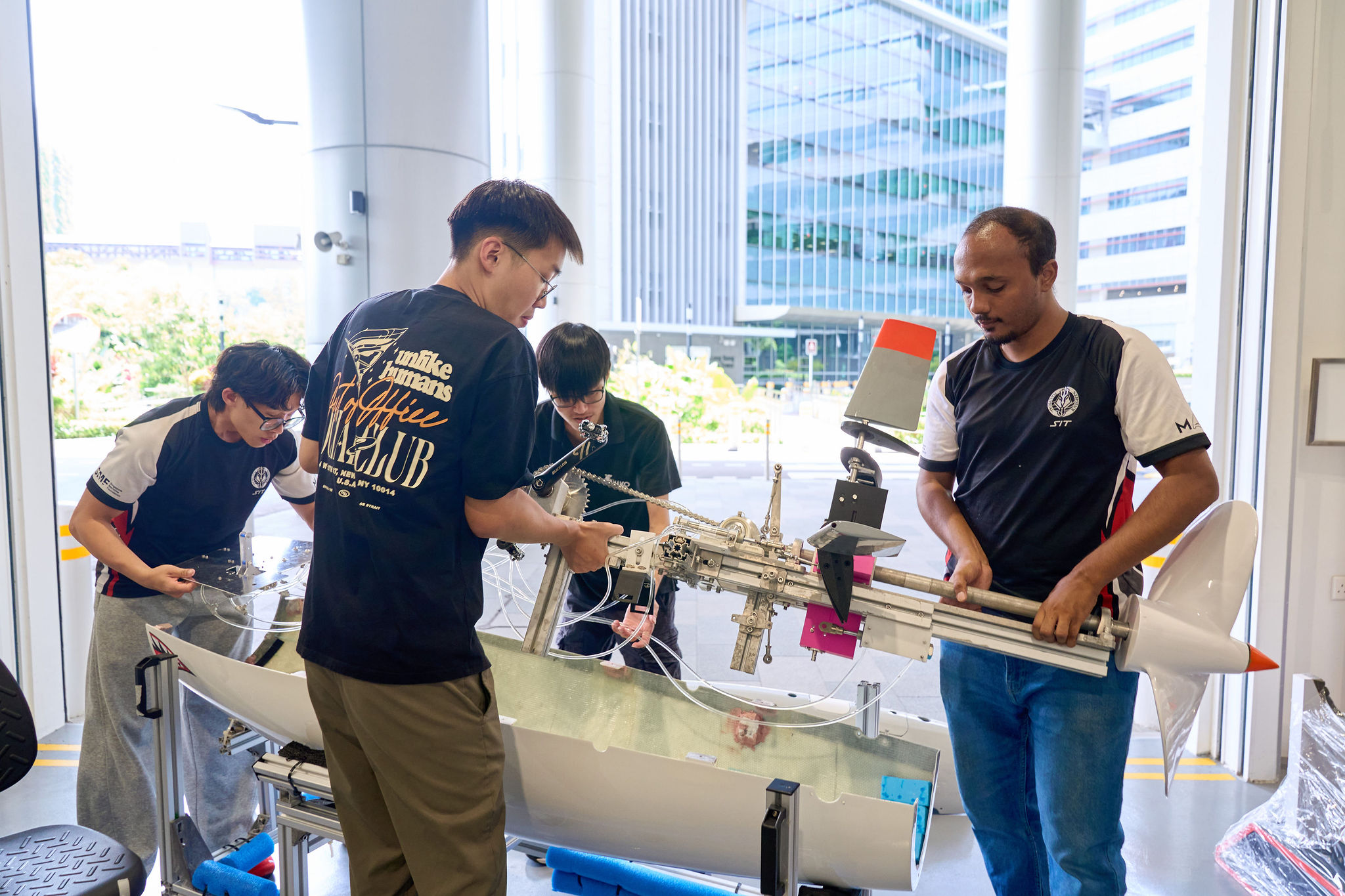
Building a submarine was only part of the challenge. Racing one demanded an entirely different level of physical and mental preparation.
The eISR challenges teams to navigate a gruelling 200-metre underwater course featuring obstacles and tight manoeuvres that test speed, precision, teamwork and endurance.
“Wearing two wetsuits in the dark, enclosed 13-degree waters, I have to focus not only on piloting the submarine, but also on my own safety and ensuring I don’t accidentally push open the hatch,” says pilot Tong Ming Yang.
Operating the submarine 6 metres underwater in a fully flooded vessel, Ming Yang pedals from a prone position while breathing through scuba equipment and steering using joysticks. Each dive requires the support of at least 4 certified divers to ensure safe operations.
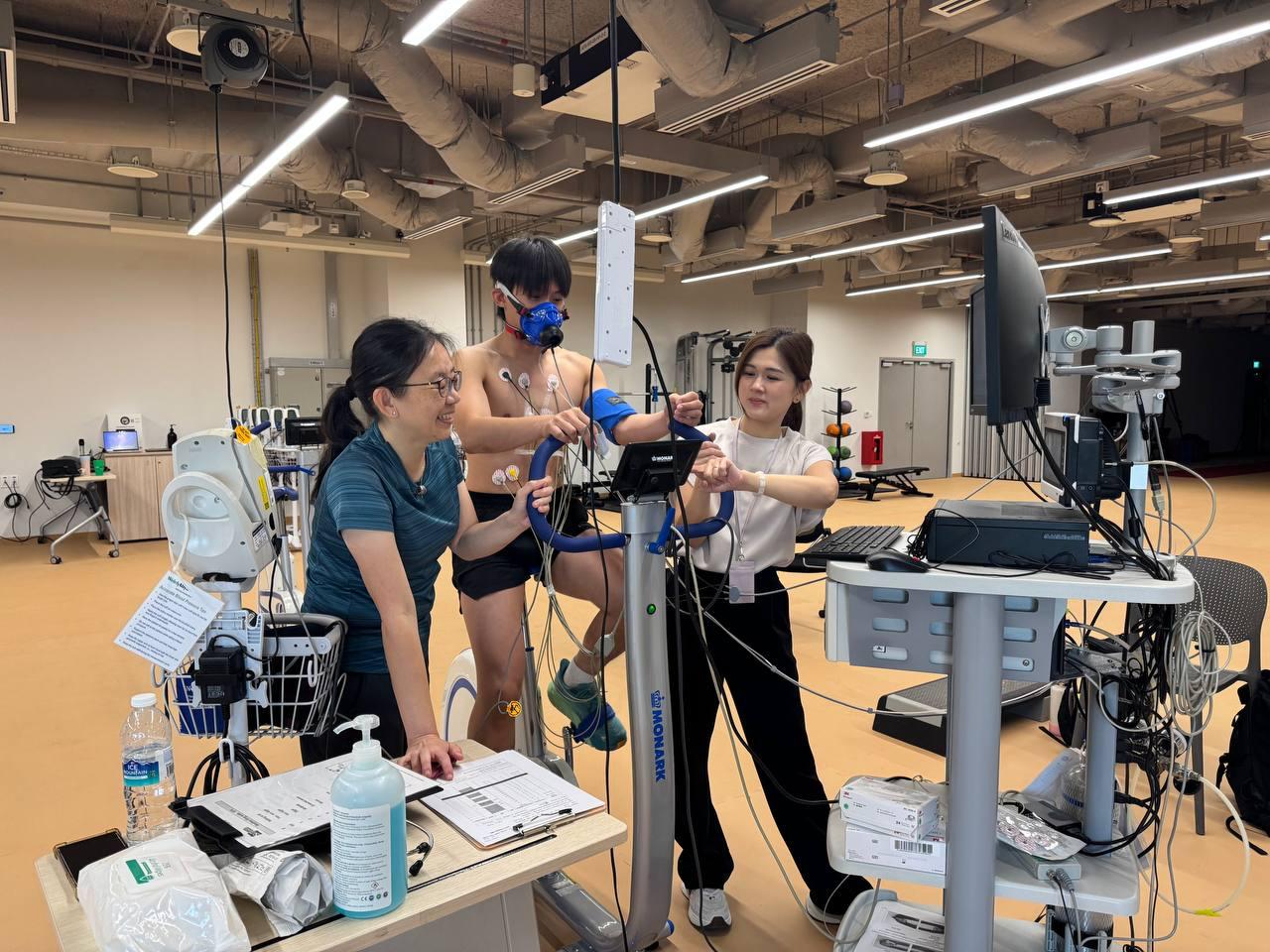
To prepare for the race, Ming Yang undergoes high-intensity interval training at least twice a week. He also works with Associate Professor Cindy Ng and Ms Brenda Ong — both physiotherapy specialists who teach across various HSS programmes at SIT. Together, they developed a tailored conditioning programme to help him maintain peak performance, with training sessions conducted at the Mrs Wong-Mah Jia Lan Human Performance Lab on SIT Punggol Campus.
For many of the students, Team MAKO pushed them beyond their comfort zones.
Logistics Lead Tan Jin Ye likened the experience to running a startup. Beyond engineering design, students had to manage logistics, administration and stakeholder coordination. The journey also transformed him personally. Despite initially fearing water, he eventually became one of the team’s key divers. “I am a much more confident person because of this experience,” he shares.
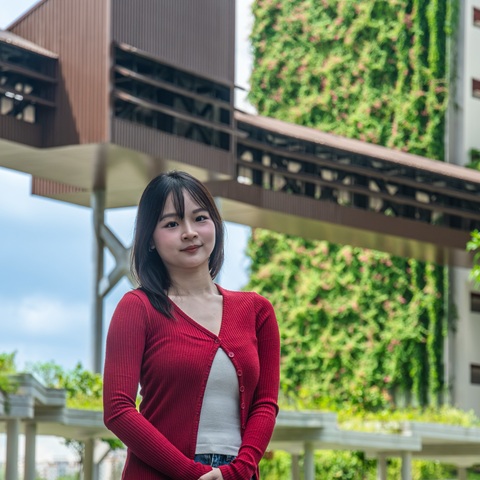
The sense of camaraderie also inspired Tong Wei Lin to join the team after witnessing the dedication her twin brother, Ming Yang, poured into the project. “I wanted to make the most of my university life and be part of something meaningful,” she says.
That sense of shared purpose would prove invaluable when the team encountered some of its biggest challenges.
Overcoming Setbacks Together
This year, Team MAKO introduced several enhancements to its latest submarine, MAKO II-E, which includes a compressed-air pneumatic safety system and enhanced electronic controls to improve underwater manoeuvrability and enable safer emergency surfacing.
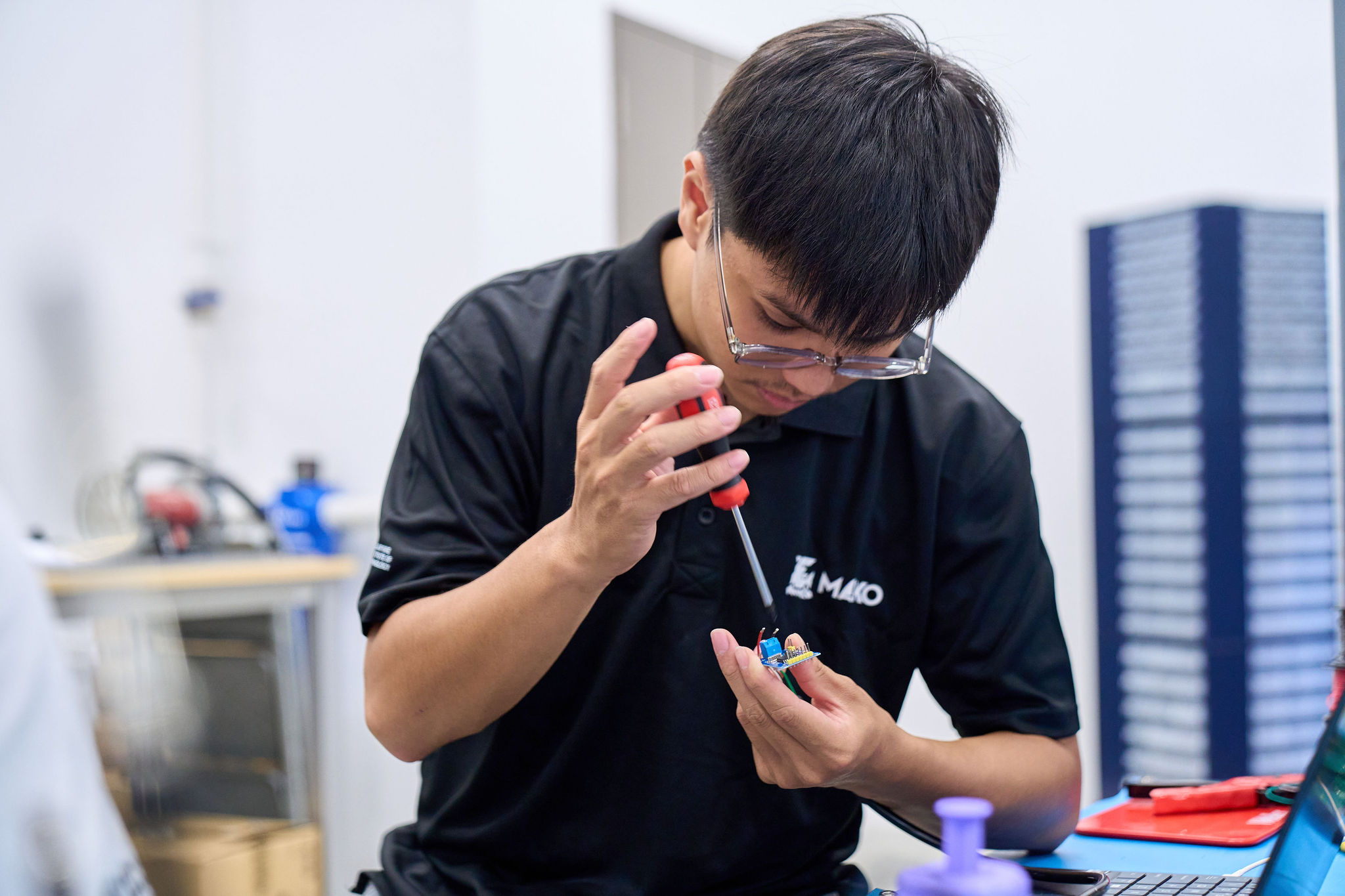
For Electrical Lead Alfred Law, contributing to the submarine’s control systems became a meaningful milestone in his engineering journey.
“The pride and joy in seeing your system work as intended — and knowing it showcases the capabilities of SIT students — is unlike anything else,” he shares.
The journey, however, was not without setbacks.
The team had to adapt and improvise when the hull did not fit the pilot well. In another instance, an electronic system failure during a wet test threatened to derail months of preparation.
“The hardest thing is to show up the next day after months of working on the submarine and nothing worked. But we tell ourselves that we can do it, and we do it for each other” says Madhan.
That resilience and shared purpose became one of Team MAKO’s defining strengths
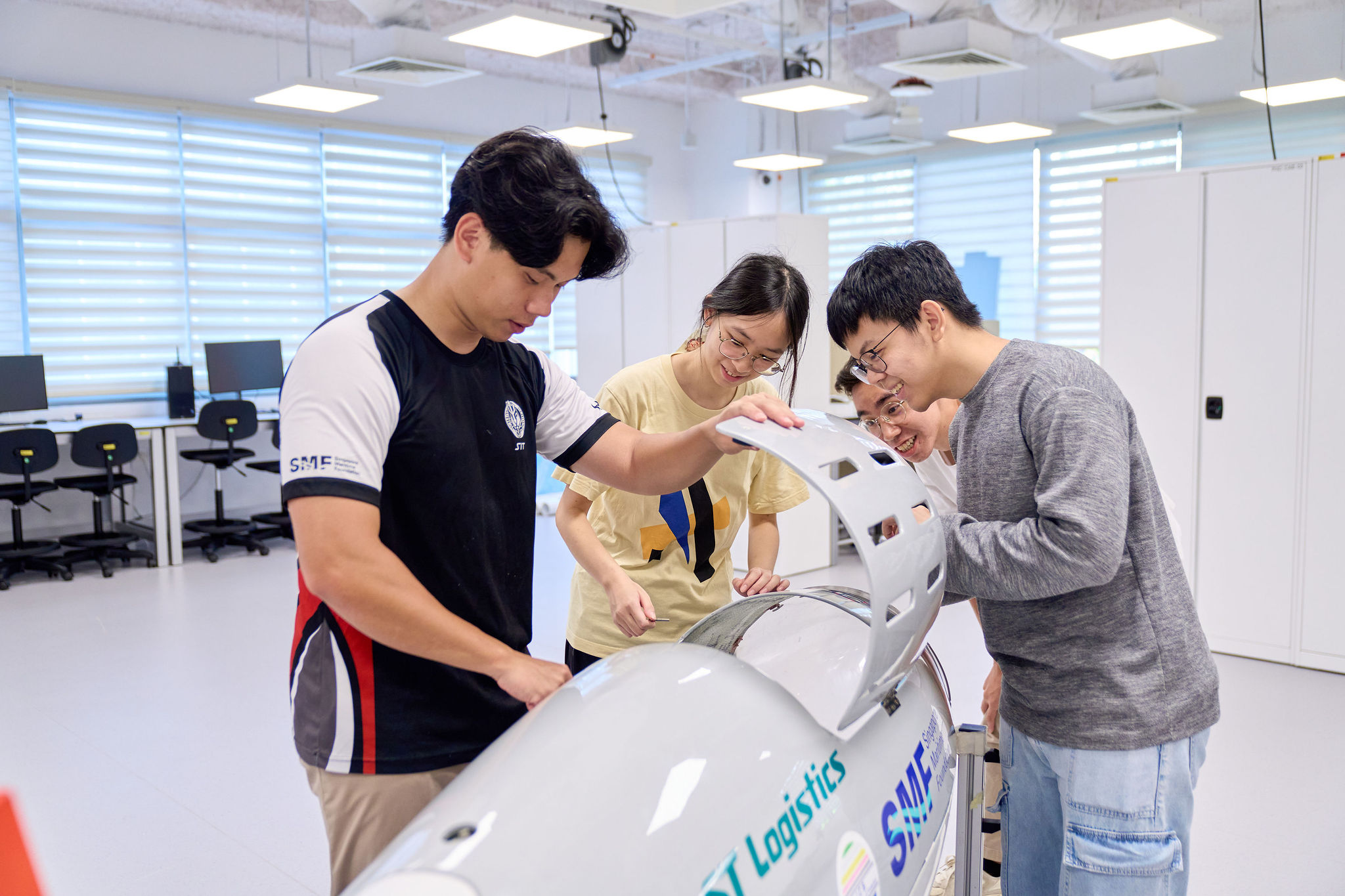
Despite these challenges, the team persevered and continued refining MAKO II-E right up to competition.
Their efforts paid off at eISR 2026, where Team MAKO delivered its strongest showing yet, placing among the competition’s top teams and earning podium finishes in several categories. The result reflects the steady progress the team has made since its groundbreaking debut in 2024.
Hull Lead Koh Ryui Zai reflects, “Working towards a shared goal makes the journey more meaningful and enjoyable.”
The team’s achievements have also gained recognition beyond competition. In April, Team MAKO was invited to showcase MAKO II-E and share its inspiring journey at the Singapore Maritime Week.
“Team MAKO is a strong example of SIT’s applied learning philosophy in action. They have demonstrated not only technical capability, but also problem-solving skills, professionalism, and the confidence to represent SIT on an international stage,” says Associate Professor Wang.
Yet Team MAKO's achievements would not have been possible through the efforts of students and faculty alone.
We Made It Because of You
Behind Team MAKO is the support of a community of donors, sponsors, alumni and industry partners who helped turn an ambitious idea into reality.
Donors and organisations such as Mr Bryan Teo (Team MAKO Alumni), DSO National Laboratories, Penguin International Limited, Singapore Maritime Foundation, Subnero, SUT (Society for Underwater Technology – Singapore) have played a key role in funding the overall project and supporting the team’s journey. Their contributions helped drive the development of the human-powered submarine from prototyping through to full concept realisation, while also covering operational expenses for activities conducted both locally and overseas.
Beyond financial support, the students also gained access to professional resources and out-of-reach opportunities including invitations to prestigious events like Singapore Maritime Week and a platform to present their project to ministers and members of the public.
“These gave our students the confidence to turn ideas into working systems, allowing them to experience the full engineering cycle from concept to competition,” says Associate Professor Wang.
More than a submarine team, Team MAKO has become a platform for students to grow into confident, industry-ready engineers, problem-solvers and leaders. Every setback overcome and every breakthrough achieved stands as a testament to the community that believed in them from the very start.
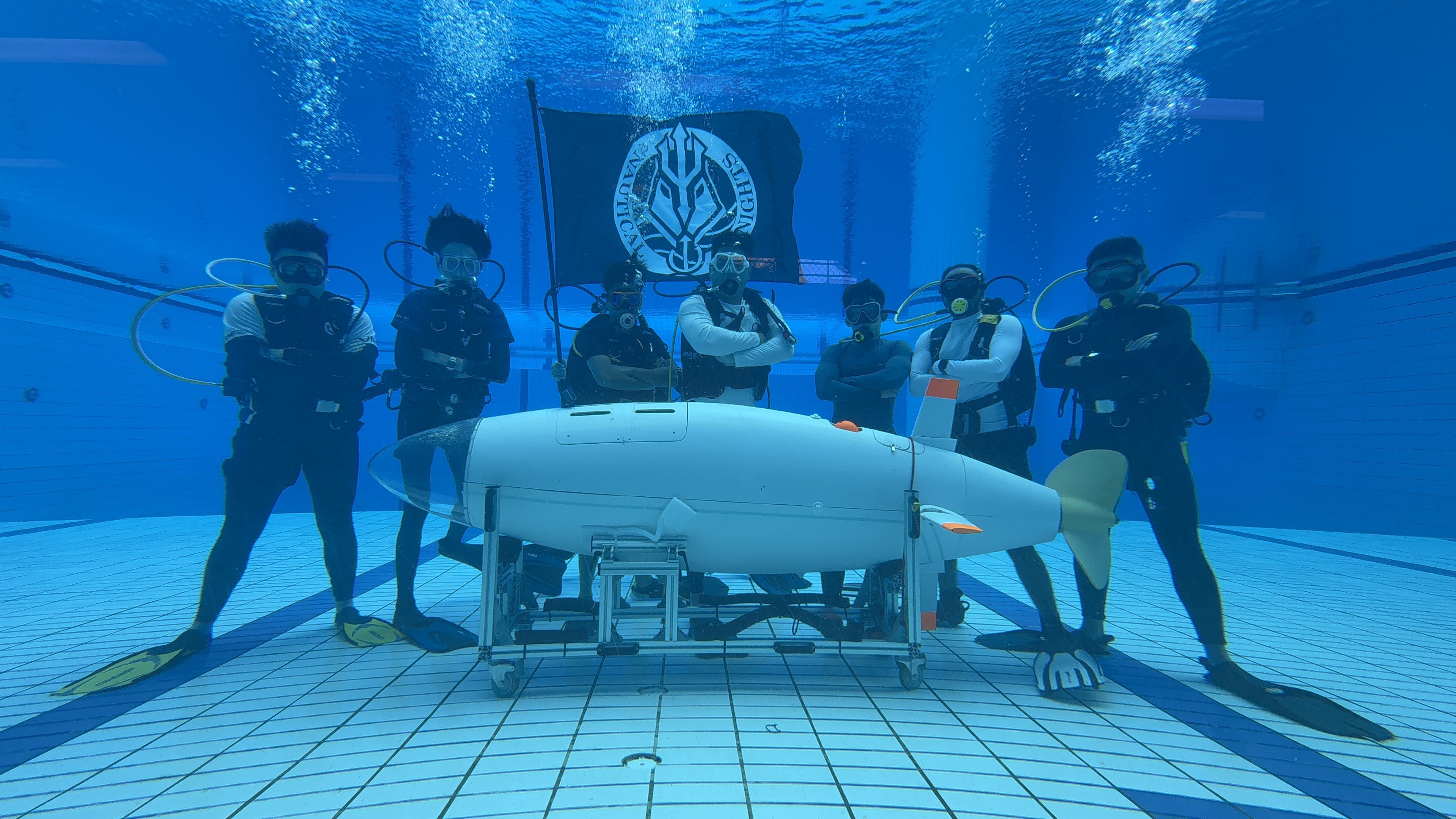
“Because of your support, we can represent Singapore internationally and continue exploring uncharted waters,” the team shares in appreciation to its donors, partners and supporters.
Driven by passion, tested by setbacks and strengthened by the support of the community, Team MAKO has once again carried SIT’s applied learning onto the international stage. Its performance at the eISR 2026 is more than a competition result – it reflects what becomes possible when SIT students are given the opportunity, trust and support to pursue bold ideas.
For the students behind Team MAKO, the journey has never been simply about building a submarine or winning a race. It is about exploring the unknown, learning through challenge and discovering what they can achieve together. As the team looks ahead, that spirit of exploration continues to guide its course while inspiring future students to think boldly and push beyond perceived limits.